

SMA Coaxial Connector Power Handling & Features
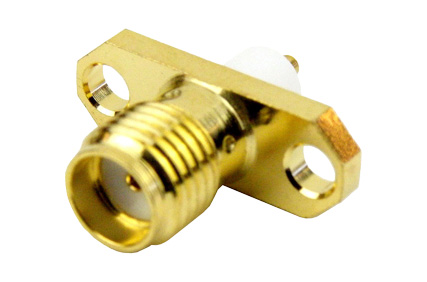
Coaxial connectors are incredibly versatile interconnects, but naturally come with several limitations. One such limitation is power handling, which is a vital consideration for many applications leveraging one of the most common types of coaxial connectors, the SMA connector. There are a host of variations of SMA connectors, including standard, precision, ultra-precision, and specialized SMA connectors for high-voltage and other applications. Though this diversity of SMA connector options means that it is relatively easy to find SMA connectors that meet key technical parameters, it must be noted that the power handling capability of these connectors is not necessarily consistent across SMAs.
In some cases, the power handling capability of an SMA isn’t even listed in the datasheet. This could be as a given SMA connector may be designed to pair with a range of coaxial cable types where the power handling capability of the connector exceeds that of the coaxial cable. Other considerations may be that the SMA power handling depends on frequency and how the SMA connector is installed. With most connectors and RF components/devices in general, power handling is a function of frequency. Most RF devices can handle less power at higher frequencies, which is due to the increase in losses at higher frequencies. One of the main reasons for limited power handling is that electrical losses result in electrical to thermal energy conversion, and high rates of thermal energy result in excessive heating of the parts materials. In the case of SMA connectors, the dielectric spacer between the center and outer conductors is often a polymer, which will only be rated to less than 200 degrees C (165 degrees C is common). This is why power ratings are often given to a certain wattage over a specified frequency range to a maximum temperature. There are some high power or extended power SMA variants available that can exceed the power handling of other SMA connectors by the same manufacturer. As these ratings and methods vary by manufacturer, careful deliberation may be needed to ensure that a SMA connector with the appropriate capability is selected.
For example, an SMA connector only rated to 12 GHz may have a higher listed power handling capability than an SMA connector rated to 26.5 GHz. However, the 26.5 GHz SMA may actually have a higher power handling capability at 12 GHz, just not at the peak frequency. As there are SMA connectors with operating frequency capability exceeding 30 GHz and some only with a peak operating frequency of 8 GHz, this creates an additional level of complexity when comparing SMA connector power handling. A common standard frequency SMA connector may have a continuous wave (CW) power handling of 100W at ~100 degrees to 125 degrees C. Where a precision SMA that operates at 26.5 GHz or 30+ GHz may only have a power handling between 50 degrees and 75 degrees C. There are SMA connectors that have power handling capability that exceeds 200 Watts, though they may have a limited operating frequency range to 18 GHz or even 12 GHz depending on manufacturer. Some manufactures may list a peak power handling with a pulse rate and duty cycle instead of, or alongside, a CW power handling rate.
