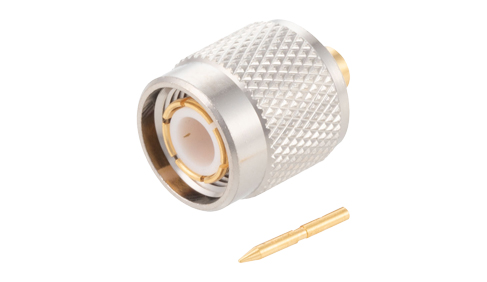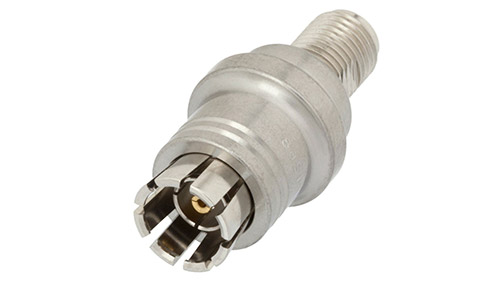

What is A Blind Mate RF Connector?
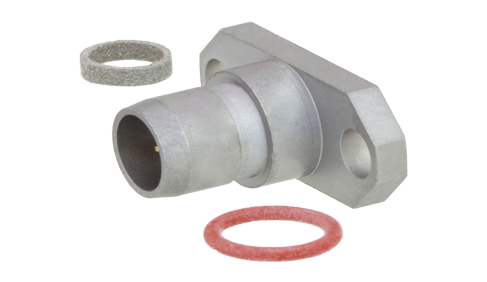
Key Takeaways
- Blind mate RF connectors allow tool-free mating without visual alignment.
- Ideal for high-density, modular, and automated RF systems.
- Designed to tolerate axial and radial misalignment.
- Widely used in test equipment, telecom, aerospace, and defense systems.
- Available in designs supporting microwave and millimeter-wave frequencies.
What Is a Blind Mate RF Connector?
A blind mate RF connector is a type of radio-frequency coaxial connector designed to mate without the use of threaded couplings or tools, instead relying on sliding, push-on, or self-alignment features to make a reliable RF connection. Unlike traditional threaded RF connectors that require visual alignment and wrench tightening, blind mate connectors allow two compatible mating surfaces to be joined simply by sliding or pressing them together, often in situations where access is limited or direct visual alignment is difficult. This capability makes blind mate connectors especially useful in high-density and automated interconnect scenarios, such as board-to-board, cable-to-board, rack and panel assemblies, and test fixtures, where repeated connections are performed without operator visibility.
The term “blind mate” refers to the action of connecting RF interfaces without direct sight of the connector pair; instead, alignment and retention mechanisms guide the connection and ensure electrical continuity. These mechanisms can include detents, undercuts, or guided float mounts that compensate for minor misalignments during engagement, helping maintain consistent electrical performance even when you can’t see or manually orient the connector pair. Wikipedia+1
How Blind Mate RF Connectors Work
Blind mate RF connectors typically incorporate design features that help align and retain the mating interface during engagement. Instead of a threaded coupling, the mating pair may use slide-on or snap-in geometries with built-in detents or floating guides. These features help ensure good contact between the center conductors and outer shields, preserving the characteristic impedance (usually 50 Ω), good shielding, and low VSWR performance.
Many blind mate designs also include retention springs or float mechanisms that provide controlled compliance, allowing slight axial or radial movement while maintaining a stable electrical connection. This is particularly important in applications with vibration, thermal cycling, or mechanical tolerances were rigid, threaded connectors would be difficult to engage reliably.
Because they don’t require wrenches or manual thread engagement, blind mate connectors are well-suited for automated testing, quick replacement modules, and equipment that is frequently serviced or accessed in tight spaces
Many RF engineers are familiar with the standard threaded coaxial connector that range in sizes from several centimeter to sub-millimeter diameters. For some of the standard types of coaxial connectors and specialized versions there are also Blind-Mate RF Connectors, which are made for scenarios where mating with threaded or bayonet types of connections may be difficult or impossible. Blind-mate connectors also differ from spring-contact type connectors as well, as blind-mate connectors include some type of alignment and retention mechanisms to ensure a consistent and reliable connection.
Blind-mate refers to making a coaxial connection by sliding or pushing two compatible connectors together where a retention mechanism and alignment features establish a coaxial connection that meets specification for that connector type. These connectors typically don’t require tooling, though some type of fixturing or extra alignment tools may be useful for a technician making large numbers of blind mate connections or if the blind mate connectors are very small. An example of this is using blind mate connectors in a ganged configuration with a fixture housing that functions as a multi-conductor cable assembly. This can be extremely useful for high-density interconnect situations from board-to-board or cable-to-board.
Blind-mate connectors typically offer more reliable connection than spring-force contact style RF Connectors
(such as pogo pins) in rugged applications where the forces could easily separate a connection and cause wear for spring contacts. This is because blind-mate connectors are often designed to captivate the center conductor and use multiple points of retention to ensure good outer conductor contact along the entire diameter of the outer conductor. In this way, blind-mate connectors can also provide better shielding than spring-force contacts. Mating or cycling the connection of blind-mate connectors is more difficult and involved than spring-force contacts but can still reliably be done over many thousands of cycles depending on the design of the blind-mate connector.
This is why blind-mate connectors are now often used in automated testing of RF systems and high-speed digital systems. There is a general legacy rule-of-thumb that blind-mate connectors can’t achieve the same level of repeatability as threaded coaxial connectors. For a human operator making the connection, this is likely true. However, there is evidence that an automated system can mate blind-mate connectors to a similar if not superior level to threaded coaxial connectors. This is significant because there are now blind-mate coaxial connectors that reach millimeter-wave frequencies, where automated testing has previously been difficult or expensive. In order to bring down costs of millimeter-wave systems, reliable and repeatable automated testing connections are extremely valuable.
FAQs (Frequently Asked Questions)
1. What is a blind mate RF connector used for?
A: Blind mate RF connectors are used where RF connections must be made without tools or visual alignment, such as in automated test systems and modular RF assemblies.
2. How does a blind mate connector differ from threaded RF connectors?
A: Unlike threaded connectors, blind mate connectors rely on push-on or slide-on engagement and self-alignment features, enabling faster and easier mating.
3. Are blind mate RF connectors suitable for high-frequency applications?
A: Yes, many blind mate connectors support microwave and millimeter-wave frequencies, depending on the connector type and design.