
Top 5G Applications and Associated Interconnect/Antenna Hardware
Key Takeaways
- 5G applications span massive MIMO, mmWave, small cells, DAS, and V2X communications.
- Advanced antenna systems are crucial for high-capacity, beamforming, and coverage optimization.
- Interconnect hardware must support higher frequencies, low loss, and low VSWR.
- Small cells and DAS play a crucial role in dense urban and indoor 5G coverage.
- Automotive and V2X applications rely on rugged, vibration-resistant RF connectors and cables.
Why Interconnect Hardware Is Critical in 5G Networks
Interconnect hardware is a critical enabler of 5G network performance, reliability, and scalability. As 5G systems operate across a wide frequency range—from sub-6 GHz bands to millimeter-wave frequencies above 24 GHz—the demand on RF cables, connectors, adapters, and antennas increases significantly. High-frequency signals are more sensitive to insertion loss, impedance mismatches, and signal reflections, making precision interconnect components essential for maintaining low VSWR and consistent signal integrity. Even minor interconnect inefficiencies can degrade throughput, increase latency, and reduce overall network performance in dense 5G environments.
The complexity of modern 5G architectures, including massive MIMO, beamforming, and carrier aggregation, further amplifies the importance of high-quality interconnect hardware. These systems rely on multiple parallel signal paths that must perform uniformly to ensure accurate phase and amplitude of control.
Future Trends in 5G Antenna and Interconnect Technology
As 5G continues to evolve, antenna and interconnect technologies are advancing to support higher frequencies, increased data rates, and more compact system designs. One major trend is the growing adoption of millimeter-wave and hybrid sub-6 GHz/mmWave networks, which require ultra-low-loss cables, precision connectors, and advanced antenna arrays. These developments are driving demand for smaller, lighter, and more integrated interconnect solutions that can deliver consistent performance while minimizing signal degradation. As 5G expands into applications such as private networks, industrial automation, and connected vehicles, antenna and interconnect technology will continue to evolve as a critical foundation for next-generation wireless infrastructure.
The 5G rollout is steadily progressing with sub-6 GHz 5G steadily expanding around the world and millimeter-wave 5G emerging in dense urban pockets in major metropolitan areas. Fairview Microwave has launched a video highlighting current 5G applications and trends and the interconnect and antenna hardware associated with those trends.
Major areas of 5G application growth are:
- MIMO antennas
- Millimeter-wave technology
- Small cells
- In-building solutions
- Vehicle-to-everything (V2X) communications
MIMO technology makes use of spatial multiplexing to allow for additional communication streams. Effectively, this enhances the throughput of a communication technology without having to use additional spectrum. The basis of MIMO technology is a MIMO capable advanced/active antenna system (AAS) and a MIMO processor. For 5G applications, a MIMO antenna consists of an antenna array, typically with some phase and amplitude control for beamstearing features, and additional MIMO processors. MIMO is one of the main methods being used to handle the growing data demand and the need to deliver service to a large number of users in the same vicinity, a technology known as Massive MIMO (mMIMO). Due to the increased amount of sensitive electronics in these advanced antennas, it is even more imperative to ensure their protection using technologies like RF Coaxial Surge Protectors/Lightning Arrestors.
The wider the spectrum, the greater maximum theoretical throughput. This is as true for 5G applications as any other communication. This is why many high throughput use cases are being deployed in the millimeter-wave spectrum, where there is an increasing amount of spectrum available for short-range and high-throughput applications. Millimeter-wave technology requires components, devices, and interconnects that can operate at millimeter-wave frequencies, as well as millimeter-wave compatible spectrum tools that aid in the planning and deployment of millimeter-wave technologies.
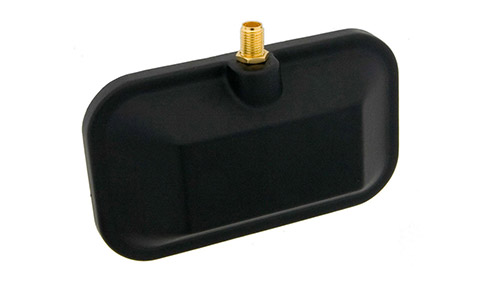
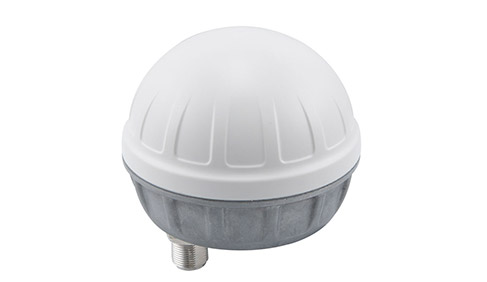
In order to provide 5G high-throughput access using MIMO and millimeter-wave technology, it is necessary to provide additional small-cell coverage amongst the macro-cell coverage in high traffic areas. This requires compact antenna systems and interconnects that can be placed strategically throughout venues, public spaces, mass transit areas, and on urban streets. The same goes for within large buildings and structures where typical small-cell or macro-cell deployments aren’t well suited to providing coverage. This is where in-building solutions, such as distributed antenna system (DAS) antennas and interconnect come into play. The main difference between small-cells and DAS installations now are location and some legacy approaches to routing cellular/Wi-Fi signals within structures.
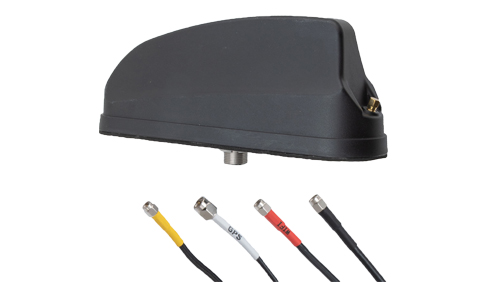
Even with the advent of work-from-home, urban congestion and vehicle traffic is still on the rise. The number of trucks and small freight operations have skyrocketed recently. These new 5G applications, as well as vehicle telematics, are being developed to better provide logistical intelligence and support with advanced tracking, predictions, and automation. A common interconnect option for 5G V2X applications and others are FAKRA RF Connectors and cable assemblies.
Recommendations
- Select interconnects rated for mmWave frequencies to future-proof 5G deployments.
- Use low-PIM connectors and cables to maintain signal quality in MIMO and DAS systems.
- Incorporate surge protection and lightning arrestors for outdoor 5G antenna installations.
- Choose compact, weather-resistant antennas for small cell applications.
- For automotive and V2X systems, use automotive-grade RF connectors designed for harsh environments.