
The Venerable N-Type Coaxial Connector
Key Takeaways
- The N-type coaxial connector is a rugged, threaded RF connector developed for reliable medium-to-high-frequency operation.
- Standard N-type connectors typically support frequencies up to 11 GHz, with precision versions extending to 18 GHz.
- The connector’s threaded coupling ensures excellent mechanical stability and low RF leakage.
- N-type connectors offer higher power handling compared to smaller connectors like SMA.
- Available in 50 Ω and 75 Ω versions for telecom, defense, broadcast, and test applications.
- Their durability and performance make them ideal for outdoor, high-power, and mission-critical systems.
Why the N-Type Remains Important Today
Despite the evolution of RF systems and the introduction of many specialized connector types, the N-type connector remains a mainstay in RF design. Its balance of rugged mechanical strength, moderate size, reliable threaded coupling, and broad frequency range makes it suitable for a wide variety of systems, especially where long-term reliability and power handling matter.
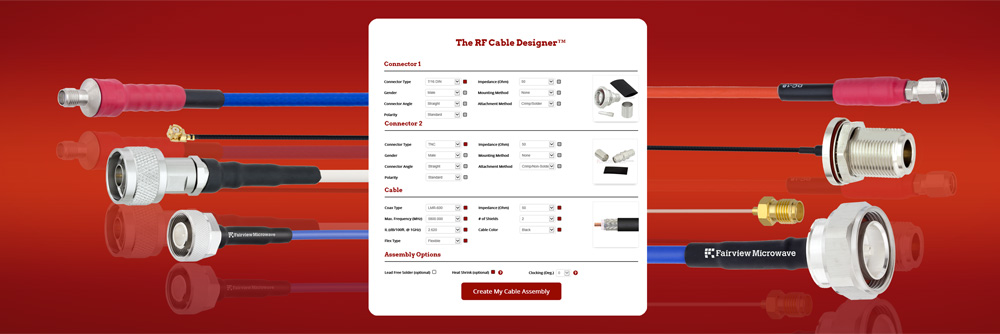
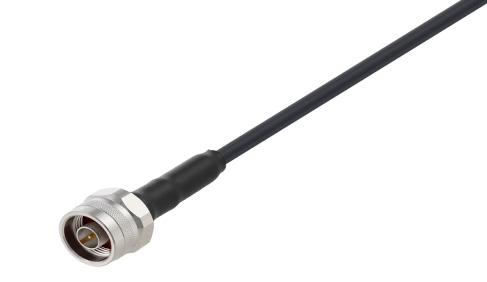
The connector design also supports a broad ecosystem of cable assemblies and adapters that help engineers interface with other coaxial standards. For instance, low-loss cable assemblies terminated in N-type connectors are frequently used to interface with instruments, antennas, and test equipment up to 18 GHz. Whether used in telecommunications, defense, test labs, or broadcast systems, the N-type connector continues to be a trusted and versatile choice, proving that some RF standards truly withstand the test of time.
The Venerable N-Type Coaxial Connector: A Timeless RF Standard
The N-type coaxial connector is one of the most enduring and widely used RF/microwave connectors in modern electronic systems. Originally developed in the 1940s and 1950s by Paul Neill of Bell Labs and Carl Councelman of Amphenol, the N-type was created to meet the growing demand for a rugged, reliable, and higher-frequency connector than earlier designs. Its development marked a significant step forward in RF connectivity, providing improved performance in wireless systems, radar, and test equipment.
There is now a veritable cornucopia of coaxial connector types. At a point in the past, however, this extensive catalog of standards and options for coaxial connectors didn’t exist. Hence, many organizations needed to develop their own coaxial connector styles to fit their application requirements. Such is the case for N Type Coaxial Connector, or Type N, which some sources claim was developed in the 1940s/1950s for the US Navy. The inventors were Paul Neill of Bell Labs and Carl Councelman of Amphenol. The N-type connector is a medium-sized coaxial connector designed with some integrated weatherproofing features and the ability to carry relatively high RF power at microwave frequencies. The original design of the N-type connector only specified performance to 1 GHz, however over time the standard determined frequency performance to 11 GHz. It is not uncommon to find precision N-type connectors, and enhancement to the design made by Julius Botka at Hewlett-Packard, that are capable of operating to 18 GHz, which is approaching the theoretical maximum for coaxial geometries in this connector type.
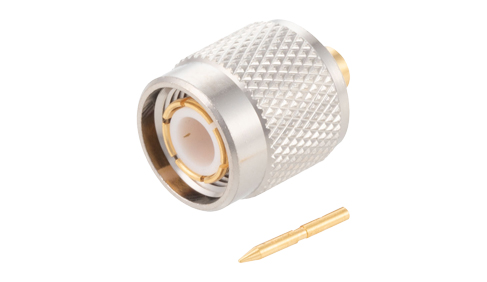
The standard N-type connector is made with a threaded coupling mechanism that was originally designed to be hand tightened. Many common N Type Male Coaxial Connectors now feature a hex-nut configuration of the threaded coupling mechanism to allow for repeatable torquing. The coupling for this connector is a ⅝-24 UNEF thread that is typically tightened between 15 to 20 inch-pounds (1.7 to 2.3 Nm), depending on manufacturer specifications. The original specification for N-type connectors provided in MIL-STD-348 presented both 50 Ohm and 75 Ohm versions. 75 Ohm versions of the N-type connector are typically only found in broadcast television and the equipment needed to test and qualify such hardware. The 50 Ohm version of N-type connectors are used extensively in cellular telecommunications, test and measurement equipment, military/defense, land mobile, amateur radio, and other applications that fit within the frequency range and benefit from the additional voltage breakdown and power handling capability that N-type connectors possess over smaller threaded coaxial connector types.
Most N Type Female Coaxial Connector and male connectors are made with right-hand threading. Though there are variations that have left-hand threading, such as with legacy wireless LAN systems. There are also reverse-polarity N-type, which use a switched center pin configuration compared to standard N-type. More recently, there have been quick-connect versions of the N-type that use a snap retention mechanism. There is also a common HN version that uses a larger ¾”-20 thread that is designed for high voltage (HV) applications, which is why the thread type is made incompatible with typical N-type connectors to avoid using lower voltage rated connectors that could fail in the same use case.
FAQs (Frequently Asked Questions)
1. What is an N-type coaxial connector used for?
A: N-type connectors are used in RF and microwave systems such as antennas, base stations, test equipment, radar, and broadcast infrastructure.
2. What frequency range does an N-type connector support?
A: Standard N-type connectors operate up to 11 GHz, while precision versions can support frequencies up to 18 GHz.
3. Is an N-type connector better than SMA?
A: N-type connectors handle higher power and environmental stress, while SMA connectors are smaller and better suited for compact, high-frequency applications.
4. Are N-type connectors weatherproof?
A: Many N-type connectors are designed for outdoor and harsh environments, especially when paired with weather-sealed cable assemblies.