


Maximizing RF System Performance with Fixed Attenuators and Terminations
Precision and control are critical for achieving optimal system performance in RF technology. Whether you're working in telecommunications, aerospace, or advanced research labs, understanding how to manage signal strength effectively can make a significant difference in the reliability and efficiency of your systems.
Key Takeaways
- Fixed attenuators and terminations play a crucial role in stabilizing RF signal levels, preventing receiver overload, and protecting downstream sensitive equipment.
- These passive components help maintain impedance matching and low VSWR, reducing reflections and signal distortions that degrade performance.
- Proper attenuation enables reliable signal control across a wide frequency range from baseband up to microwave and millimeter-wave, making them essential for modern communication, test, and measurement systems.
- Terminations are equally important to absorb and dissipate unused signal energy, preventing standing waves, reflections, and potential damage in transmission lines.
- Using the right attenuator or termination enhances the stability, repeatability, and accuracy of measurements, a must for lab setups, calibration rigs, RF test benches, and defense or aerospace systems.
Why Fixed Attenuators and Terminations Matter in RF Systems
Fixed attenuators and terminations play a foundational role in stabilizing RF and microwave systems, ensuring consistent signal performance across the entire signal chain. In high-frequency environments, even small mismatches or uncontrolled power levels can introduce losses, reflections, and distortion that compromise system accuracy. Fixed attenuators help regulate excessive signal power, allowing sensitive receivers, test instruments, and amplifiers to operate safely within their optimal dynamic range.
Terminations, on the other hand, ensure that unused ports, stubs, and interconnects are properly absorbed, preventing energy from reflecting into the system. Together, these two passive components maintain impedance uniformity, protect equipment, and support reliable operation for everything from SDR labs to telco networks to aerospace RF platforms.
How to Choose the Right Attenuator or Termination for Your Application
Selecting the correct fixed attenuator or termination begins with understanding the application's frequency range and ensuring the component is rated to operate well above the highest required frequency. Attenuation value is one of the most critical parameters, typically available in 1 dB to 30 dB increments chosen based on the required signal drop or power control objective. Power-handling capacity must match or exceed the system’s maximum expected input to prevent overheating or failure.
Engineers should also evaluate connector type, impedance (usually 50 ohms), and VSWR performance to maintain system consistency. For high-accuracy measurement applications, phase stability and temperature tolerance also matter. Terminations follow similar selection criteria, with a focus on power-handling capability and broadband performance to ensure reliable energy absorption.
Common Pitfalls in RF Setups without Proper Attenuation or Termination
Failure to use adequate attenuators or terminations can introduce several issues that degrade RF system performance. Excessive signal power may overload receivers, causing compression, intermodulation, or even hardware failure. Mismatched impedances lead to reflections, standing waves, and unpredictable variations in amplitude or phase. Unused ports without terminations can act as unintended antennas or noise sources, contributing to interference or measurement instability. Additionally, inadequate attenuation during testing can result in inaccurate measurements, poor repeatability, and unreliable calibration data. Over time, these issues compound and create costly troubleshooting challenges that could otherwise be avoided with proper component selection.
Why RF Fixed Attenuators and Terminations Matter
At their core, RF fixed attenuators are passive devices designed to reduce the power level of an RF signal without distorting its waveform. This is essential for:
- Protecting Sensitive Equipment: High-power signals can damage delicate components in receivers or test equipment. Attenuators help mitigate this risk by controlling signal levels.
- Improving Measurement Accuracy: In testing environments, precise attenuation ensures that instruments measure true signal characteristics without being overloaded.
- Enhancing System Stability: By managing reflections and impedance mismatches, attenuators contribute to overall system reliability.
Paired with RF terminations, which absorb unused signals to prevent reflections, these components are indispensable for maintaining signal integrity. Terminations help prevent standing waves and reduce signal degradation, especially in high-frequency environments.
Key Applications of RF Fixed Attenuators and Terminations
- Testing and Measurement: Ensuring accurate, repeatable test results in lab environments.
- Telecommunications: Managing power levels in high-frequency communication networks.
- Broadcast and Satellite Systems: Optimizing signal distribution while minimizing loss.
- Aerospace and Defense: Enhancing the performance and reliability of mission-critical RF systems.
Common Challenges in RF Signal Management and How Attenuators Help
Managing RF signals isn’t without its challenges, especially as systems become more complex and demand higher frequencies. Some common issues include:
- Signal Reflection and Standing Waves: Reflections can cause interference and reduce system efficiency. RF attenuators help by controlling impedance mismatches, minimizing these reflections.
- Overloading of Receivers: High-power signals can overwhelm sensitive receivers, leading to distortion or damage. Attenuators regulate signal strength, protecting critical components.
- Thermal Management: High-power RF systems generate heat, which can affect performance. Using attenuators helps manage power levels, reducing thermal stress on equipment.
- Maintaining Signal Integrity Over Long Distances: In applications like telecommunications, signal degradation over distance is a concern. Attenuators ensure consistent signal quality by controlling power fluctuations.
Choosing the Right RF Attenuator or Termination
When selecting an attenuator or termination, consider the following factors:
- Frequency Range: Ensure the device supports the required operating frequency.
- Power Handling: Match the power rating to your system's needs to avoid overheating or failure.
- Attenuation Level: Choose the appropriate dB value based on how much you need to reduce the signal strength.
- Connector Type: SMA connectors are popular for their reliability in high-frequency applications.
Introducing Fairview Microwave’s RF Fixed Attenuators and Terminations
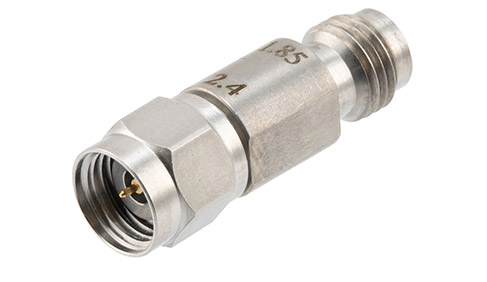
For professionals seeking high-quality, reliable components, our RF fixed attenuators and terminations are engineered to deliver exceptional performance:
- SMA Connectorized Designs: Ensure secure, high-frequency connections.
- Wide Attenuation Range: Options from 1 to 10 dB, plus 20 dB and 30 dB, for flexible application use.
- High Power Ratings: Handle up to 20W (CW), suitable for demanding RF environments.
- Superior Frequency Performance: Optimized for applications up to 26GHz.
- Durable Terminations: Rated for 5W, 10W, and 20W loads, built for longevity.
If you’re looking to enhance your RF system's reliability and performance, explore our range of RF fixed attenuators and terminations. Discover our solutions today
Recommendations
To maximize RF system reliability and measurement accuracy, engineers should incorporate fixed attenuators and terminations into every test setup, prototype bench, and high-frequency signal chain. Begin by ensuring that all unused ports found in directional couplers, splitters, vector network analyzers, and switch matrices are terminated with properly rated loads.
Use attenuators to regulate input power levels, especially when working with SDR platforms, spectrum analyzers, or amplifiers with sensitive front ends. For long-term operation, choose components with strong thermal stability, low VSWR, and robust construction designed for your frequency and power requirements.
It is also recommended to periodically inspect and replace RF components exposed to harsh environments or mechanical stress. With proper attenuation and termination practices, RF systems will perform more predictably, experience fewer failures, and deliver higher-quality measurements.
