
Demystifying GNSS (GPS) Antenna Type: Fixed Radiation Pattern Antenna (FRPA) and Controlled Radiation Pattern Antenna (CRPA)
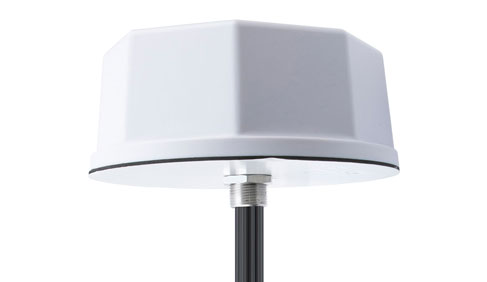
GNSS antennas are either Fixed Radiation Pattern Antenna (FRPA) or Controlled Radiation Pattern Antenna (CRPA). For most applications, FRPAs are more than adequate, and CRPAs have only become legal for civilian use less than a decade ago. However, CRPAs do present much higher anti-jamming and anti-interference, otherwise known as positioning resilience, than FRPAs. This blog discusses the difference between the two GNSS antenna types.
Key Takeaways
GNSS antennas are broadly grouped into Fixed Radiation Pattern Antennas (FPRAs) and Controlled Radiation Pattern Antennas (CRPAs) understanding which is appropriate for your scenario is crucial.
FPRAs provide a fixed reception pattern, are simpler and lower cost, and are adequate for many typical GNSS installations.
CRPAs offer dynamic or adaptive radiation-pattern control (beam steering or nulling) to reject interference, improve robustness in difficult environments, and are increasingly available for civilian use.
The radiation pattern (gain vs elevation and azimuth) of a GNSS antenna is a key spec — good antennas favor satellites above the horizon and suppress unwanted reflections and multipaths.
Installation environments (vehicle, ship, fixed base-station, mobile) and interference environments (jamming, reflection, multipath) heavily influence the choice between FRPA vs CRPA.
Cost/performance trade-off: CRPAs deliver higher performance in challenging conditions, but at higher complexity and cost.
Fixed Radiation Pattern Antenna (FRPA)
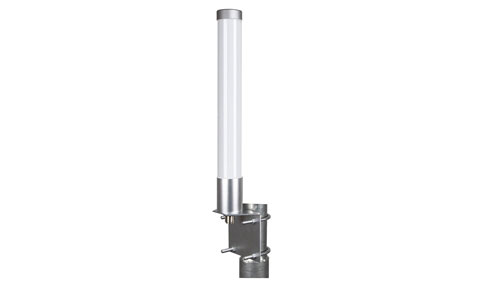
FRPAs are often patch antennas on a printed circuit board (PCB) or metallized structure but may also be a whip antenna or some other antenna type that is suited to the GNSS/GPS device. For instance, GNSS/GPS handheld/portable devices have whip antennas that protrude from the handheld device due to the form factor. Given the relatively low-gain of typical GNSS/GPS antenna for many applications, these antennas are often closely placed to a low-noise amplifier (LNA) or may even have a LNA and additional RF circuitry directly integrated into the GNSS/GPS module. This of course, then requires external power to the GNSS/GPS antenna module, which isn’t suitable for all applications. Given the lack of directivity of many GNSS/GPS antennas, these devices are prone to interference and jamming from any source that can inject significant signal energy within the antenna’s relatively wide reception pattern.
Controlled Radiation Pattern Antenna (CRPA)
CRPAs, unlike FRPAs, are fabricated with an array of antenna elements that are connected through RF and digital electronics that allows for sophisticated beam steering. The multi-antenna arrangement and control/processing electronics allow for CRPA antennas to adaptively control the antenna pattern to present nulls to potential interferers, while still allowing for reception from the target satellites. This results in interference and jamming signals to be heavily attenuated compared to the GNSS/GPS signals from the satellite constellations. CRPAs are standalone devices, and don’t actually interfere or are involved with the GNSS/GPS receiver. The electronics that control the amplitude and phase of the signals being received by each antenna element are self-contained within the CPRA module itself. Given the additional antennas and electronics, CPRAs tend to be larger than FRPAs, and require a separate power source that is reliable.
Hence, they can be used as an enhancement or replacement of a typical GNSS/GPS antenna without modifying the GNSS/GPS receiver technology. This can be particularly advantageous in heavily cluttered environments where interference is too common.
Frequently Asked Questions (FAQs)
Q1. What is the difference between FRPA and CRPA?
A: FRPA (Fixed Radiation Pattern Antenna) has a static, designed radiation-pattern suited to typical satellite geometry; CRPA (Controlled Radiation Pattern Antenna) introduces dynamic control (beam steering, nulling) to adapt to changing signal/interference conditions.
Q2. Do I always need a CRPA?
A: No. For many fixed or low-interference applications, an FRPA is sufficient and more cost-effective. CRPAs are best when signal conditions are poor; interference is present, or platform is mobile.
Q3. How does radiation pattern affect GNSS performance?
A: The pattern dictates how well the antenna picks signals from different directions. Good GNSS antennas favor overhead satellites and suppress low-elevation or reflected signals to reduce multipath and improve accuracy.