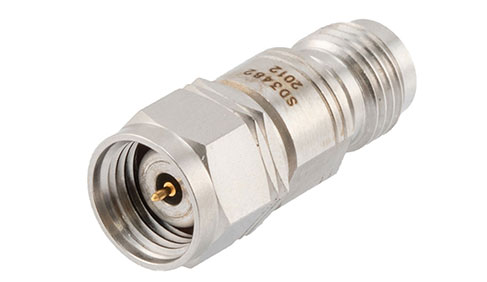
Frequency selection is a key aspect of RF system design. There are often times where it is desirable to ensure only a signal energy from a limited spectrum enters or progresses through an RF signal chain. In the case where frequencies below a certain cutoff point should be diminished in the signal chain, Waveguide High Pass Filters or Coaxial High Pass Filters are essential. High-pass filters present a high level of reflective or absorptive attenuation to all frequencies below the cutoff frequency. Based on the quality and design of a high-pass filter, nearly all of the signal content and even noise of frequencies under the cutoff can be removed.
Key Takeaways
- A high-pass filter allows frequencies above a certain cutoff to pass while attenuating frequencies below that cutoff, effectively removing low-frequency noise or unwanted signals.
- In RF and microwave systems, high-pass filters are especially valuable for blocking low-frequency interference or DC, enabling only desired high-frequency content to proceed through the signal chain.
- High-pass filters can be implemented in different forms — from simple passive RC/LC circuits to complex coaxial or waveguide assemblies, depending on frequency range, power levels, and system requirements.
- Key parameters like cutoff frequency, insertion loss, out-of-band rejection, VSWR, and power handling must be carefully evaluated: no filter is ideal, and trade-offs exist between filter steepness, passband loss, and complexity.
- High-pass filters help improve overall signal integrity and system stability by rejecting unwanted low-frequency content a critical function in radar, satellite comms, wireless systems, and high-frequency test setups.
What Is a High-Pass Filter — Basic Principles and Operation
A high-pass filter is an RF or microwave component designed to allow signals above a specific cutoff frequency to pass through while attenuating or blocking signals below that threshold. Its fundamental purpose is to remove low-frequency noise, interference, or unwanted spectral content that could distort or degrade higher-frequency signals. High-pass filters function by presenting a high impedance at low frequencies—effectively rejecting them while providing a low-impedance path for desired higher-frequency signals. Depending on the design, they may use lumped LC networks, distributed transmission-line structures, cavity resonators, or waveguide geometries. Regardless of format, the goal remains the same: protect the integrity of high-frequency performance by shaping the spectral content of the signal chain with predictable, repeatable roll-off characteristics.
Why High-Pass Filters Matter in RF/Microwave Signal Chains
In RF and microwave systems, high-pass filters play a critical role in maintaining signal clarity, preventing interference, and ensuring stable system operation. They help eliminate low-frequency disturbances that often originate from power supplies, environmental electrical noise, harmonics, or system-level coupling effects. This suppression is particularly important in radar systems, satellite communications, wireless backhaul, wideband receivers, and high-frequency test equipment, where even minor low-frequency noise can corrupt sensitive measurements or degrade modulation quality.
Additionally, high-pass filters help block DC offsets that could damage downstream components such as LNAs, mixers, or ADCs. By ensuring that only the required high-frequency spectrum reaches key system blocks, high-pass filters support better sensitivity, improved dynamic range, and enhanced overall RF performance.
Common Pitfalls and Limitations When Using High-Pass Filters
Although high-pass filters are essential in many RF systems, they must be applied carefully to avoid unintended degradation. One common pitfall is selecting a cutoff frequency too close to the lowest operating frequency, which can lead to steep roll-off requirements, increased insertion loss, or passband ripple. Another issue occurs when lumped-element filters are used at higher frequencies than intended, where parasitics introduce unpredictable behavior. Poor impedance matching or improper connector selection can also increase reflections, raising VSWR and reducing system stability.
In some cases, insufficient power handling can lead to overheating, detuning, or permanent damage. Engineers must also be cautious about group delay variation, which can distort wideband or phase-sensitive signals. Awareness of these limitations helps avoid performance bottlenecks and system-level failures.
As all RF filters present loss in the passband, high-pass filters also result in some loss in the passband. Other performance metric considerations are the extent of the filter rejection, or out-of-band attenuation. No filter is ideal, and high-pass filters don’t have a perfect cutoff under the frequency limit. The filter attenuation gradually increases over frequency under the cutoff at a rate that depends on the filter design, complexity, and quality. More expensive and specially designed filters will present better filter response. However, for many high-pass filter applications, high performance isn’t required, and adequate attenuation and filter response steepness can be achieved without extensive complexity. There are a variety of high-pass filter design approaches that can be achieved with a simple RC/LC lumped element circuit, resonator, or relatively simple active circuits.
High-pass filters are often used when there is low frequency signal content that may enter the signal path. For instance, there may be a variety of lower frequency systems on a platform or congestion at lower frequencies that is beneficial to remove before attempting to apply further conditioning to a signal. A key benefit of high-pass filters for some applications is that they block DC and very low frequency signals, such as analog or power signals, and allow RF, microwave, and millimeter-wave signals to pass. Depending on the operating frequency range of a system, a high-pass filter may be used to remove interference and noise for all frequencies below the operating frequency, which removes the concern of the most common naturally occurring interference/noise phenomenon.
As there are many common forms of interference at lower frequencies, such as power line noise, electrostatic discharge (ESD), high pass filters are used extensively in testing and practical RF circuits. A high-pass filter may also be useful in very wideband systems where a wideband bandpass filter may be less desirable to greater complexity and possibly higher passband attenuation.
Recommendations for Effective Integration of High-Pass Filters in RF Systems
For optimal results, engineers should select a high-pass filter with a cutoff frequency comfortably below the system’s operating band to minimize passband distortion and insertion loss. In high-frequency and high-power environments, coaxial or waveguide filters are recommended for their superior stability, handling capability, and RF performance. Proper attention should be given to connector compatibility, mechanical alignment, and environmental sealing, especially in outdoor or mission-critical deployments. When low-frequency noise is a major concern, placing the high-pass filter early in the signal chain—before amplification can significantly improve signal integrity.
For precision applications, reviewing group delay characteristics and ensuring a flat passband response minimizes distortion. Finally, routine inspection and maintenance of connectors, waveguide joints, and mounting hardware help preserve long-term reliability and prevent drift or degradation in demanding environments.